Showing posts with label reviews. Show all posts

Monday, April 11, 2022

The Grisham Papers: A Time to Kill (movie)


IMDb Description: In Canton, Mississippi a fearless young lawyer and his assistant defend a black man accused of murdering two white men who raped his ten-year old daughter, inciting violent retribution and revenge from the Ku Klux Klan. 

Ebert review: three stars ("...the movie is interested in the white characters as people and black characters as atmosphere.")

Lawyer protagonist: Jake Brigance (Matthew McConaughey, in his first break-out role)

Evil antagonist: D.A. Rufus Buckley (Kevin Spacey); white supremacy; systemic racism; KKK; oppressive heat

Client: Carl Lee Hailey (Samuel L. Jackson)

Star supporting cast: Ellen Roark (Sandra Bullock, miscast IMHO); Harry Rex, Jake's friend (Oliver Platt); Lucien Wilbanks, Jake's mentor (Donald Sutherland); Carla Brigance, Jake's wife (Ashley Judd); Chris Cooper as a local police officer

Background: A Time to Kill was the first Grisham novel published, but the fourth to be adapted to a film. Matthew McConaughey was basically an unknown at the time and the studio and director took a chance on him. He was entering the big leagues with Sandra Bullock and Samuel L. Jackson, and even though he's the clear star of the movie he's billed after both of them (apparently it's alphabetical billing). He does well in his first starring role; Jackson is great as always; and Bullock is slightly miscast in my opinion as the smart, liberal, brash law student begging to be Jake's assistant free of charge. It's directed by Joel Schumacher, a sort of poor-man's Michael Bay, fresh off of Batman Forever. Two years previously he also directed another Grisham adaption, The Client. 

In small town Canton, Mississippi, two Confederate-loving degenerate rednecks come across a ten-year old black girl walking home from the grocery story. They grab her and proceed to tie her up and rape her (thankfully this is all implied in the filmmaking but it was still hard to watch). The two men are arrested, and as they are walking through the courthouse to be arraigned, Carl Lee, the girl's father, guns them down in front of A LOT OF PEOPLE. Local boy lawyer Jake Brigance takes the case, more out of a desire to be famous and further his career with a super difficult case than to see justice prevail. 

Justice prevailing. Hmm. Everyone knows that Carl Lee committed the crime. He did it out of vengeance. The film comes down mostly on the side that what he did was okay, because sometimes there is "a time to kill". Justice has been served. But revenge as a motive has never sat well with me. Carl Lee is the breadwinner for his family, and with him in jail his family struggles to get by. If he gets the death sentence, then what happens to his family? The long-term consequences do not outweigh the short-term feeling of satisfaction. Being there for his family, especially his little girl that experienced unimaginable trauma and physical pain, is a far better choice. 

Carl Lee and his role in the crime that starts the story becomes secondary to how being his lawyer affects Jake, the white protagonist. The Ku Klux Klan targets everyone around him, eventually burning down his house and causing him to send his wife and daughter away. It can be a bit simplistic way to view the racial aspects of the story. The film goes fairly easy on the individual and systemic racism, and instead uses the KKK as the real villain of the film. 

It makes me think of an article I read a couple summers ago during the social unrest after the killing of George Floyd. While racism is a systemic issue, most media and schools portray the evils of racism through the KKK or one bad person like a sheriff or cop. It allows white people to feel removed from systemic racism and to claim that it was basically solved when the Civil Rights Act was passed. But that's not the case; racism IS individual but it's also very much systemic. 

The film follows all the basics of the story from the novel, but excises all the extraneous parts that weren't necessary to tell a complete story. It also chooses to actually show Carl Lee on the witness stand, instead of completing skipping out on it like Grisham did. However, it all happens really fast and is over so quickly that I wish there had more to come from it. 

The production values are good throughout, with lots of interesting camera movements. Schumacher stages his scenes well, particularly when Jake visits Carl Lee in jail. Everyone is doused in sweat, which I honestly thought was a really nice touch. The story isn't exactly interested in legal strategy and how the legal system works, but it's a fun enough legal "thriller" that's worth a watch. 


Tuesday, February 22, 2022

The Sparks Oeuvre: The Choice (movie)

Tagline: Let your heart decide. 

IMDb description: Travis and Gabby first meet as neighbors in a small coastal town and wind up in a relationship that is tested by life's most defining moments. 

Roger Ebert review: sadly, Roger Ebert passed before this film was released, and therefore the review on his site is not by him. 

Female protagonist: Gabby Holland (Teresa Palmer)

Male protagonist: Travis Shaw, changed from Parker in the book (Benjamin Walker)

Star supporting cast: Tom effin' Wilkinson as Travis' dad; Maggie Grace as Travis' sister; Tom "Superman" Welling as Gabby's boyfriend

Background: Despite being the sixth book published, it was the eleventh (and so far last) to be adapted to a movie. I can't find any information on why, so I've gone ahead and made the reason be that the book was not well-liked so it just languished. That doesn't explain, though, why it was even chosen for a movie adaptation when they are other Sparks books that could have been chosen! I guess we'll never know. 

First off, let's discuss the movie poster which so obviously deviates from the now-standard "two people about to kiss as a light shines between them". This poster has the lovers not even facing each other! And it has a weird color palette (clearly subjective, I know). Every time I saw this as a thumbnail when scrolling through Netflix or Amazon Prime I just thought it looked ugly so I never bothered to watch it. 

The film is still the story of Travis and Gabby, neighbors that fall in love despite him being a playboy and her being completely annoyed by him (but is she??). Oh, and Gabby also has a long-term doctor boyfriend which is a huge DESPITE as well. Small things though when you find your real person. Travis and Gabby soon fall into something over a weekend when her boyfriend is away. The book doesn't really have any tension on whether Gabby is going to tell her boyfriend and end up with Travis. The movie, though, goes a bit cliche and has her unsure of what to do or who to choose. It comes to a head when her boyfriend returns home early and, while out with Gabby and his parents at the local restaurant, Travis also happens to be there. 

This leads to  a showdown between Gabby and Travis. She tries to be like "well, we didn't define what this is." And Travis is like "Oh, so you have fun time with country boy and run back to your rich boyfriend." I don't entirely buy this direction of the argument from Travis; he acts as if he's some poor country boy (like Noah or Dawson) when he actually owns a vet practice with his dad, has a home on the shoreline, owns a boat and a motorcycle, and is well-respected in the community as a vet. The dude speaks with a country accent, but that doesn't mean he's poor. When Gabby is trying to find some footing she claims that she doesn't even know how he feels. To which Travis grabs her face and says HE LOVES HER. He says it over and over. And even though the timeline is still ridiculous, I roll with it because both of the actors really sell it. 

She ends up telling her boyfriend, who is mad at her at first but then proposes. And she says yes, which she tells Travis in a note she leaves for him. Only in movies do people say yes to proposals from the wrong person just to prove a point. They of course make their way back to each other and we see only our second Sparks wedding (the other being in A Walk to Remember). 

There's a nice montage of their life together, until the Sparks Tragic Occurrence that has Gabby in a coma after a car crash and Travis left with the difficult choice of having to pull the plug. He doesn't and she eventually wakes and everything is great. 

Not a lot changes from the book. It's mostly small inconsequential stuff (random name changes, adding a side story for his dad) that generally helps tell a tighter story. The timeline is still very fast, but for whatever reason the actors sell it (Benjamin Walker more so than Teresa Palmer) so when Travis tells Gabby in his southern drawl (the first actor in a Sparks adaption to actually use an accent after Rachel McAdams in The Notebook) that he loves her I believe it. 

I know I give the timeline of the falling in love a lot of heat, but it's an interesting thing to think about. Gabby has been with her boyfriend a long time, and if she had never met Travis she likely would have married him and been happy. Travis would have gone on being a bit of playboy. But they meet each other and it's like Oh THIS is actually my person. It must be a strange thing to experience. Relationships can be messy, and I guess as I get older I just acknowledge that more and realize that most people are honestly doing their best. 

Since I disliked the book so much, I had very low expectations for the movie. Which ended up serving me well, because it wasn't terrible and I mostly enjoyed it.

Saturday, February 19, 2022

The Sparks Oeuvre: The Longest Ride (movie)

Tagline: can’t find one. 

IMDb description: The lives of a young couple intertwine with a much older man, as he reflects back on a past love. 

Roger Ebert review: sadly, Roger Ebert passed before this film was released, and therefore the review on his site is not by him. 

Female protagonist: Sophia (Britt Robertson)

Male protagonist: Luke (Scott Eastwood)

Star supporting cast: Alan Alda as Ira (played as a young man by John Huston, with his young wife Ruth played by Oona Chaplin.....lots of children/grandchildren of Hollywood icons in this film)

Background: The Longest Ride was released way back in April 2013, a little over a year after The Best of Me. This is the first in the Sparks Oeuvre that I knew literally nothing about (I mean obviously I had just read the book but before that this was not anywhere in my consciousness). I hadn't even seen the trailer before I settled in to watch it! Having watched them now....wow, they are something. It's not unheard of for a trailer to be nothing like the film, but it is always fun when one is found. The trailers lean heavy in to the sexy aspect of the film and honestly I did not find the film to be that sexy. After watching the movie, it felt like the scene used at the beginning of the trailers was shot specifically for the trailer because it was awkwardly placed in the movie and didn't make a lot of sense. 

I really wanted to like this because I genuinely enjoyed the book. But the movie changes all the big and small details to make a more-cliched movie (which is saying something when it's adapted from a Sparks book). Most of the acting is pretty bad. Scott Eastwood is attractive but I never quite believe him, and the script has him be mean in one scene that is entirely untrue of his character in the book. The dialogue is very bad, including the last line of the film that makes absolutely no sense (why does Sophia ask Luke "What took you so long?" when at that point they are already married and their relationship wasn't over an extracted length of time?). Scenes are awkwardly staged and make no rational sense sometimes. 

A few good things though. The bull-riding scenes were actually staged pretty well and looked good. The characters of Ruth and Ira were excellently portrayed and had a lot of natural chemistry. But these are both very small parts of the overall film. 


Wednesday, February 9, 2022

The Sparks Oeuvre: The Best of Me (movie)

Tagline: You never forget your first love. 

IMDb description: A pair of former high school sweethearts reunite after many years when they return to visit their small hometown. 

Roger Ebert review: sadly, Roger Ebert passed before this film was released, and therefore the review on his site is not by him. 

Female protagonist: Amanda (Michelle Monaghan, Liana Liberato: young Amanda)

Male protagonist: Dawson (James Marsden, Luke Bracey: young Dawson)

Star supporting cast: Gerald McRaney (Major Dad) as Amanda and Dawson's mutual friend/caretaker/guardian/good  person

Background: This is the ninth Sparks movie adaptation, following a string of near-annual releases since Dear John in 2010. It's also the first to have a repeat actor! James Marsden played Lon in The Notebook, a truly lovely character who just happened to meet Allie at the wrong time. Here Marsden is the long-lost love from youth that gets the second chance (according to IMDb Paul Walker was originally cast but sadly died before filming started). I originally stated that I had seen this movie before, but I was wrong. I've seen parts of it because I knew the story and key plot points, but I had definitely never watched the entire film before. For whatever reasons my view on the film was negative and I was kind of dreading watching it. 

But I actually liked it! Weird, right?! 

Dawson and Amanda meet as teenagers in high school in small town Louisiana. He's from a bad family that does bad stuff; she's from a rich family. But they like each regardless and form a connection that is quite lovely. Dawson is taken in by Tuck, and both Dawson and Amanda see Tuck as a father-like figure, a friendly widower who loves them both. Dawson ends up going to jail for a truly accidental death, and rather than let Amanda wait for him he tells her he won't take her visits. She's devastated (and folks, I was invested enough in the characters that I was too). 

Twenty (one) years later, Tuck has died and his estate lawyer summons both Dawson and Amanda to their hometown per Tuck's will. Turns out he plays matchmaker from the grave, as he wants both of them to spread his ashes at his charming cottage retreat (where Dawson and Amanda spent some steaming time as teenagers). At first they are a bit cold to each other, stung by past pain and hurt. 

But, they also feel incredibly at ease and comfortable with one another. Honestly folks, it truly is a great feeling to be around a person/people that just "get" you and know how to love you. Dawson has never stopped loving Amanda, as he says during one of their chemistry-fueled dinners. Amanda is married and treading carefully, but it's clear she's also never stopped loving Dawson. (I have to suspend my own disbelief at this as I don't really think people carry torches that long, but then again I've never been in an all-encompassing, this-is-my-soulmate love so what do I know.)

Whereas the novel spent a chapter giving the background on Dawson and Amanda, the movie spends equal time with them as teenagers and as adults. This is key to why the story works better in the movie. I really feel the love and loss between them. Also, both the young and older actors playing the couple have effortless chemistry. You believe why they would be drawn to each other as teenagers and why that would last through to being adults. I mean seriously folks, every time they are on screen it's fire. 

The movie also switches up the tragedy that causes them to lose touch. The movie has the character accidentally killed be a family member and it immediately makes Dawson's story make a lot more sense. Also, their estrangement makes a lot more sense, too. In the book, I don't recall a scene of Dawson in jail telling Amanda to move on and not visit him and I was always so confused why she didn't just wait for him. Why did she get married? The whole narrative is adjusted and it makes for a better story.

The film isn't perfect. It's still burdened with Sparks' characterization of Dawson's extended family and the layers and layers of tragedy. Even with that, though, I like the characters a lot and feel even more impacted by the sad ending handed to them. Amanda, though, is at least divorced from her husband at the end of the movie and that's a win in my mind (again, I don't readily advocate for divorce willy-nilly, but it's a legitimate choice and very often the right one - happy marriages don't end in divorce and this was the right choice for Amanda). 

Friday, February 4, 2022

The Sparks Oeuvre: Safe Haven (movie)

Tagline: You know it when you find it. 

IMDb description: A young woman with a mysterious past lands in Southport, North Carolina where her bond with a widower forces her to confront the dark secret that haunts her. 

Roger Ebert review: sadly, Roger Ebert passed away a couple months after this film was released, and therefore the review on his site is not by him. 

Female protagonist: Katie (Julianne Hough)

Male protagonist: Alex (Josh Duhamel)

Star supporting cast: just Cobie Smulders as Katie's friendly neighbor, Jo

Background: This is the 8th Sparks movie adaptation, coming just a year after The Lucky One. By this point, the studio knows exactly what they're doing to promote this film and who the audience is - it's released on Valentine's Day and announces that it's from the author of "The Notebook" and "Dear John". It's always "The Notebook" that is referenced, as it's seen as the high-water mark that all other adaptions should strive to emulate. It also references "Dear John", which seems a bit weird to me because "The Lucky One" is a better movie and the more recent of the two. Julianne Hough was starting to make a name for herself separate from Dancing with the Stars, and Josh Duhamel was dipping into leading man/rom-com roles after stints in the Transformers movies (and starring as Tad Hamilton in one of my cheesy rom-com favorites, Win a Date With Tad Hamilton). 

Katie (Hough) is quite literally looking for a safe haven. She's arrived in Southport by catching a last minute bus after fleeing something dangerous. She's on the run, but we don't yet know why. We do know that she wants to be alone and live a quiet life, just living in a small cottage in the woods and waitressing at a local restaurant. Katie doesn't have a car, so she walks everywhere including the local "grocery store" run by handsome widower and dad of two Alex (Duhamel). He gives her a bike, they spend a day at the beach with this kids, they fall in love. But what is Katie's secret past?!

The movie wants us to think Katie has done something truly terrible because a cop is chasing her. When Alex sees her face on one of those "Wanted" posters he is incredulous that the woman he's just fallen in love with is in trouble with the law. He confronts Katie and she decides to leave. Alex recognizes his mistake and has the classic "chase after someone before they leave" moment, this time at a ferry. She then tells Alex she's not running from the cops, but A cop: her abusive husband. 

This is entirely different from the book and I hate the change. In the book, Katie is secretive about her former life with Alex because she's afraid of being caught by her husband if she gets too comfortable. Alex intuits a lot about her based on his background as a criminal investigator in the military (this back story is completely gone in the movie). He pieces a lot of it together but tells Katie she only has to tell him what she's comfortable telling. And then she does, because she's building trust in their relationship. The movie just ruins all of that for the cheesy "oh no I made a mistake I need to run after them."

In my opinion, the novel tells the story in a better way. It doesn't make us guess about Katie's background, and it tells how she tried to get away several times and she planned her escape for months. It's great character-building for Katie, and a lot of that is lost in the movie (although I do think Hough does a decent enough job). 

This is the second time that a Sparks adaptation is directed by Lasse Halstrom (he did Dear John, too). He's the only director to repeat in the Sparks Oeuvre, which I guess is something. He's a good director, but I think he's saddled with a somewhat bad script. The script jettisons much of the backstory of both Katie and Alex, to the detriment of both. They then become just attractive people that fall in love, which isn't bad but also leaves this film a bit....shrug, I guess. 


Friday, January 7, 2022

The Sparks Oeuvre: The Lucky One (movie)

Tagline: I can't find one. 

IMDb description: A Marine travels to Louisiana after serving three tours in Iraq and searches for the unknown woman he believes was his good luck charm during the war. 

Roger Ebert review: two and a half stars ("Luck is putting it mildly")

Female protagonist: Beth (Taylor Schilling)

Male protagonist: Logan (Zac Efron)

Star supporting cast: Blythe Danner as Beth's nana; Jay R. Ferguson as Beth's ex-husband, Keith Clayton

Background: This film is the first Sparks adaptation to be directed by an Oscar-nominated director! Scott Hicks was nominated for Best Director for "Shine" back in 1996. He didn't win, but he directed Geoffrey Rush to a Best Actor Oscar. This film came out four years after the last High School Musical movie, and it's Efron's push into being seen as an "adult" actor and not just that kid who made musicals for Disney. It works because he is....not a kid in this movie :)

The movie starts with Logan (Efron) providing voiceover about how life can change quickly and we never know when it will. We then go to Logan in Iraq. A morning after a night raid, he just standing around the rubble when something gleaming in it catches his eye. He steps over to it and finds a picture of a woman with the words "Be safe" written on the back. Then an explosion occurs right where he had been standing....finding the photo literally saved his life. He keeps the picture (after asking around to no avail to see if it belongs to someone), and he ends up surviving a few other near-death experiences. His friend and him joke about how the woman in the picture has made him lucky. 

Logan returns home and, feeling awash and that he owes this woman a thank you, he sets out on foot from Denver to Louisiana (he did some internet sleuthing to find the town where the picture with the woman was taken in. Just go with it; as Ebert says in his review: "I'm not going to say anything at all about the odds of that happening. The odds are overwhelming against anything in any movie happening, so I should just shut up and pay attention.").  

He finds her, he doesn't tell her at first why he's there, he starts working for her and her Nana at their dog kennel, they fall in love, she finds out he has the picture and is angry, he feels bad, someone dies, and they end up kissing in the morning sun. It's all very romantic. 

The film keeps the basic story of the novel, but tightens it up. It spends much less time detailing Logan's time in Iraq (it's just the opening scene) and gets way less into the detail with Beth's ex, Keith (the novel has chapters that were from his point of view and I hated them). It also doesn't explicitly address that Logan is kind of a stalker. In the novel Beth actually confronts him and tells him he's a stalker. The movie softens this a bit and never outright says that his behavior is definitely obsessive. However, when a person is attractive or we like them, then actions that would generally seem stalkerish and obsessive get overlooked (especially in movies!). 

I've said it many times before, but having a good director that can get good performances from his actors makes all the difference. It's what elevates mediocre Sparks adaptations to great ones. Zac Efron gives a wonderful performance; he's quiet, contemplative, never moving more than he has to, forceful when he needs to be, charming, and romantic. Taylor Schilling, at this basically unknown and starring in her first movie (lucky her!), really sells Beth. She plays every emotion across her face and in her eyes, she's vulnerable and a little unsure of herself and when she gets her big moment of standing up for herself she nails it. 

This is also probably the most sexy of the Sparks adaptations. I know we have The Notebook, which has really been the only one to have an out-and-out sex scene, but to me this one is better (and hotter). It's a different relationship between Logan and Beth. Noah and Allie fell in love young and are both loud characters; Logan and Beth are the opposite and while their connection is no less strong, beautiful, and passionate it is displayed and conveyed differently (and really directed and acted well by everyone involved). 

This is likely in the top three of Sparks movies for me, probably second after A Walk to Remember, even with it's slightly melodramatic ending that sees someone die (this IS Sparks after all). Logan and Beth are characters I like (and her son Ben is truly adorable in every sense). I accept the misunderstandings and untold secrets because they are two lonely and lost people that needed to find each other and I want them to get their happy ending. 

Thursday, December 2, 2021

The Sparks Oeuvre: The Last Song (movie)

Tagline: A Story About Family, First Loves, Second Chances, and the Moments in Life That Lead You Back Home

IMDb description: A rebellious girl is sent to a Southern beach town for the summer to stay with her father. Through their mutual love of music, the estranged duo learn to reconnect. (this description is so weird because music is honestly not what helps them reconnect)

Roger Ebert review: two and a half stars ("Miley Meets Cute over a spilled milkshake")

Female protagonist: Veronica "Ronnie" Miller (Miley Cyrus)

Male protagonist: Will Blakelee (Liam Hemsworth)

Star supporting cast: Greg Kinnear as Ronnie's dad; Kelly Preston as Ronnie's mom; Bobby Coleman as Ronnie's brother (I only note him because he was the kid star of the movie I worked on in 2009, Snowmen 

Background: the second Sparks adaption to be released in 2010, the only time there were two Sparks in one year. This came two months after Dear John and was the first to have a screenplay by Sparks himself. He actually started the screenplay first as a vehicle for Miley Cyrus, which made reading the book interesting. This film is also infamous/famous for being how Miley Cyrus and Liam Hemsworth met. They dated on/off for ten years before getting married in late 2018 and then divorced in 2019. (Yes I know too much because it's one of those celebrity relationships I was inexplicably invested in.)

Since the screenplay is written by Sparks, there's not too much that's different from the novel. Sparks is still trying way too hard to make Ronnie an outcast. When she first arrives, against her will, for a summer with her dad and brother, she walks on the beach and gets stared at by all the other girls there in their swimsuits. Because Ronnie is wearing jeans and boots. That would get stares from anyone; it does not make Ronnie an outcast or the others girls mean. 

Sparks, however, loves his gender stereotypes and almost all of the girls are mean and have it out for Ronnie. The mean girls try to break up Ronnie and Will by giving her bad information. Will even says the classic, tropiest of lines "You're not like other girls." Yes, Ronnie is different because she wants to save sea turtle eggs nesting near her dad's home and is....nice. It's all very surface-level. 

Which is to be expected, as this is a story centered on teens and their drama, angst, and love. It's fine for certain demographics, but I'm beyond the age where any of it feels compelling. 

The story ends in sad tragedy, as Ronnie's dad is dying of stomach cancer. He's kept it a secret (is this a thing people do in real life?) so he can enjoy one final summer with his kids. He and Ronnie patch things up before he passes, and it's actually very sweet that Ronnie chooses to stay and take care of her dad when the summer is over. 

If you're curious about seeing a celebrity relationship where it began, this could be a good watch for pure anthropological purposes. If not, then it can definitely be skipped. 


Saturday, October 30, 2021

The Sparks Oeuvre: Dear John (movie)

 Tagline: What would you do with a letter that changed everything?

IMDb description: A romantic drama about a soldier that falls for a conservative college student while he's home on leave (this is truly a strange description that labels Savannah as "conservative" which has no bearing on the story). 

Roger Ebert review: two stars ("....heartbreaking story of two lovely young people who fail to find happiness together because they're trapped in an adaptation of a Nicholas Sparks novel.")

Male protagonist: John Tyree (Channing Tatum)

Female protagonist: Savannah Curtis (Amanda Seyfried)

Star supporting cast: Richard Jenkins, the best character actor out there, as John's coin-collecting dad; Henry Thomas as Savannah's friend/future love 

Background: This is the fifth Sparks adaption and also the fifth Sparks book! The movie was released in February, which is a perfect time for a Sparks movie to hit theaters as by this point a Sparks movie was shorthand for a romantic "chick-flick" and it likely had a marketing campaign geared towards Valentine's Day. Also, for whatever reason this film was not produced by Denise Di Novi, who had a producer credit on all previous Sparks adaptations except The Notebook. 

I think I like the movie adaption more than it's source. The movie makes some weird changes with characters that aren't necessary, but it also cuts out some unnecessary elements that make the story tighter. As with most Sparks adaptations, the movie leaves out all the religious stuff (it's pretty minor in this book). The director is truly the key to a good Sparks adaptation, and Lasse Hallstrom does a decent job with this one (he's the only person to director two Sparks adaptations). He has very pretty if not exceptional actors in Channing Tatum and Amanda Seyfried, but he manages to give each of them two knockout scenes. 

For Tatum, he actually gets two knockout scenes, which is fine because he's the main character. The first is when he's returned home immediately after 9/11. He gets a short leave before presumably re-enlisting, but doesn't know how to tell Savannah since he had been nearing the end of this commitment and both were excited for planning their future together. Faced with John being gone even longer and in a more dangerous situation is more than Savannah can take. John has a moment with Savannah where he just pours his heart out and ends with "just tell me what to do?". Tatum plays this so well, showing John's struggle between his commitment to Savannah and to the military. 

His second comes in my favorite scene (probably of all Sparks adaptations). His father is in the hospital near the end of his life. John and his dad have had a strained relationship most of his adult life, not for lack of love but for understanding. But since Savannah he had started seeing his dad differently and was understanding him better. He writes a letter to his dad, a letter that encompasses all his love. At first he just gives it to his dad to read later, but he realizes that's not possible and decides he'll read it out loud to his dying dad. Tatum knocks this out of the park. He has just the right amount of emotion. The quick tears leaving his eyes. And his dad slowly puts his hand on his head and the two hug and cry together. This brings me to tears every time I watch it. Both Tatum and Richard Jenkins kill in this scene. 

Savannah makes some truly baffling decisions, with the motivation seemingly being that she's in a Nicholas Sparks adaptation so there has to be angst. I don't want to downplay or overlook her feelings and how having John gone and the stress of worrying about his safety while's deployed affected her. BUT. Instead of, I don't know, talking through it with him or a professional, she instead starts writing less. Then makes the truly baffling decision to instead get married to a family friend who is sick with cancer and has an autistic son. She believes that being a wife, mother, and caretaker is an easier choice than waiting for John to come home. 

For most of the film, Amanda Seyfried plays Savannah as sweet and loving and frankly she doesn't have much to do. But near the end of the film she's given a scene that lets her showcase Savannah's pent up anger and exhaustion, as she tells John how difficult it was for her when he was away. I feel her struggle and pain. I just wish she had found a way to express that before she decided to tell him she was engaged when she Dear John'd him (also, the letter serves as a breakup letter but it's also her announcement to John that's she's engaged, so technically she cheated on him and that's not cool).

There is one truly baffling scene (it's in the book, too), where John is visiting Savannah in her new life. Somehow wine is spilled on both their shirts; John goes to the bathroom to wash it out (what??) and Savannah goes into her room to completely change her blouse (okay?). These are both baffling choices, but there are more! Savannah doesn't close her door when she's changing her blouse, also is not wearing a bra even though she was out riding and working with the horses earlier (not one to judge other women not wearing bras, but it seems highly unlikely in this scenario she wouldn't be wearing one), and John sees her in the mirror from the bathroom. They just stare at each other for a moment and it is truly bizarre. 

As mentioned previously, the truly moving relationship of the film is the one between John and his father. Richard Jenkins, who is marvelous in everything, plays John's father so quietly perfect of an adult man that was never officially diagnosed as on the Autism spectrum. John is always a little bit exasperated by him, as he's a good father that has provided for him but John has never been able to connect with him. They once shared a love of chasing and collecting coins, but John grew out of that. 

I feel like this review craps a bit on the movie, and gives the sense that I didn't care for it. And maybe it's not my favorite because of the scenarios that seem to only exist because a Sparks plot dictates strife and tragedy. However, the scene with John and his dad always redeems it for me. Give it a watch if you've never seen it. 


Sunday, October 3, 2021

The Sparks Oeuvre: Nights in Rodanthe (movie)


Tagline: It's never too late for a second chance. 

IMDb description: A doctor, who is travelling to see his estranged son, sparks with an unhappily married woman at a North Carolina inn. 

Roger Ebert review: one and a half stars ("A Leaky Weeper" is the title of a truly great review)

Male protagonist: Dr. Paul Flanner (Richard Gere)

Female protagonist: Adrienne Willis (Diane Lane)

Star supporting cast: Viola Davis as Adrienne's best friend; Christopher Meloni as Adrienne's cheating husband; uncredited James Franco as Paul's son; Mae Whitman as Adrienne's daughter

Background: Gere and Lane starred together as married couple in 2002's Unfaithful, the Adrian Lyne sexy thriller that earned Lane an Academy Award nomination for Best Actress. That same year, Nights in Rodanthe was published, and made it's way to this adaptation in 2008. As the fourth Sparks movie adaptation (and fourth adaption!), it's the first to nearly completely miss the mark. 

For the most part, the story from the novel is the same. However, for the first time in the Oeuvre, the changes that were made for the screen feel detrimental to the film. The biggest change, for me, is the update in Adrienne's marital status. In the novel, she's been divorced for three years, but in the movie she's just separated from her cheating husband. Separated is still married, and I just don't like that this means Adrienne is technically cheating. This change effectively removes the lovely arc in the book of Adrienne and Paul both having the new versions of themselves post-divorce be discovered and loved by someone else. 

The book uses the Sparks-loved device of flashback to tell the story. None of the adaptations have kept this device (except, of course, The Notebook, as it's actually integral to the story) and this is the first time where I felt like it was actually needed. Without it, we lose all sense of Adrienne's journey. We lose the scope. We lose meaning in her choices and the way she has learned to live with the loss. None of it translates with the shortened time frame of the film. 

 Nights in Rodanthe underscores how important the director is in making a Sparks adaption really work. Director George C Wolfe has a great cast, but he mostly squanders it. Gere and Lane were great as a married couple in Unfaithful, and they do their best here but are saddled with a bad script and very bad staging. Wolfe bizarrely stages a dinner scene between the two where I was sure Gere wasn't actually there and Lane was acting against a stand-in; then he frames them each against a yellow wall in medium close-ups and it looks so very bad. He can't direct a proper kissing scene, as I was sure Paul was going to devour Adrienne's face. The visual effects are terrible, and the post hurricane scenes are laughable when their intent is to be tragic.  

This adaptation felt distinctly like most involved did not understand the essence of the book, and just wanted to cash in on the popularity of the last Sparks adaptation, The Notebook; at this point in the timeline of the Sparks Oeuvre it's become the standard and created/enforced the shorthand we know today as "a Nicholas Sparks movie." Unfortunately, it takes more than attractive actors to make a good Sparks adaption. 

Sunday, September 19, 2021

The Sparks Oeuvre: The Notebook (movie)


Tagline: Behind every great love is a great story. 

IMDb description: A poor yet passionate young man falls in love with a rich young woman, giving her a sense of freedom, but they are soon separated because of social differences. 

Roger Ebert review: three and a half stars

Male protagonist: Noah Calhoun (Ryan Gosling, young; James Garner, old)

Female protagonist: Allie Hamilton (Rachel McAdams, young; Gena Rowlands, old)

Star supporting cast: Pulitzer Prize Winner Sam frickin' Shephard as Noah's dad, Joan Allen as Allie's mom

Background: This was Sparks' first novel, but his third to be adapted to a film. However, according to his commentary in the DVD extras, the film rights were sold before the film was even finished. There were various directors and actors attached (Spielberg, Cruise) but for whatever reasons nothing was ever a go and it ended up being the third film adaptation. Whatever those reasons were seem to have worked out just fine, as the film was a smash and is generally seen as the quintessential Sparks movie. 

If I had read the book first, well before it became a movie, I likely would have been pretty pleased with the adaptation. It stays pretty true to the story and characters, but adds a lot more to the beginning of the story. In the book, Noah and Allie's summer romance takes up about 2-3 pages. The movie, though, spends almost half of the movie on the summer romance. We see them meet, dance in the street, ride bikes together, meet parents. We experience the passion and sometimes volatility of their love. They fight and don't always agree, but they always make up because they truly love each other. 

This extra time with Allie and Noah is pivotal to understanding their relationship. We've seen them fight and laugh and get frustrated with each other. Most notably in their break up at the end of summer, when they go from declarations of love to crying to screaming to apologizing to leaving. When they have reunited, and Allie must choose between Noah and her fiance, Lon, she's given the straight truth by Noah - sometimes they'll fight and he'll tell her when she's being a pain in the ass but they'll work on it because they love each other. 

I used to think their fighting was a bit much. However, I watched the film with the director Nick Cassavetes commentary and it changed my perspective. He said he made Allie and Noah fight and yell in the film because, being Greek, he felt that was normal in relationships (and then said that perhaps those from colder ancestries maybe felt different and I felt that as a person with Danish ancestry haha). Anyway, Cassavetes made great choices with the film that really set it apart and I think he was perfect for it. I especially liked his stance on Lon - that if Allie had met him first he likely would have been her one true love, but it was really a matter of timing not him being a bad person. James Marsden plays Lon so perfectly. 

The film holds up really well after all these years, I think because of the great actors involved and a director who knew exactly what he wanted. It feels the most grandiose and epic and passionate of the Sparks films (to this point) and I recommend it. 

Monday, August 30, 2021

The Sparks Oeuvre: A Walk to Remember (movie)


Tagline: She didn't belong. She was misunderstood. And she would change him forever. It all comes down to who's by your side.

IMDb description: The story of two North Carolina teens, Landon Carter and Jamie Sullivan, who are thrown together after Landon gets into trouble and is made to do community service. 

Roger Ebert review: 3 stars (he calls it "a small treasure")

Male protagonist: Landon Carter (Shane West)

Female protagonist: Jamie Sullivan (Mandy Moore)

Star supporting cast: Peter Coyote as Jamie's dad and Darryl Hannah (in a truly terrible wig, per the DVD commentary) as Landon's mom

Background: This film came out at the start of the second semester of my freshman year of college in January 2002. I feel pretty sure I saw it at the theater in Ephraim, UT but I can't find my ticket stub. However, I remember very clearly my BFF, Lindsay, and I being obsessed with it that summer when we returned to Pocatello. We rented it (bought it?) and watched it several times. We even watched it with the commentary from Adam Shankman (the Director) and Shane West and Mandy Moore. We were obsessed with the soundtrack (it slaps y'all). Lindsay even got her hair cut like Mandy Moore (not in the film, but in the "Cry" music video). Lots of nostalgia wrapped up with this one. I did my re-watch for this project with my friend Rachel and we had a great time watching it. 

As with Message in a Bottle, the basic story from the novel makes it's way to the screen. But once again, the medium of film brings the story to life and adds to it. First, the film swaps out the 1950s for present day; this change feels critical. Second, movie-Landon is more of a present-day cool kid (in the book he's Student Body President and planning for college, in the movie he's smart but doesn't really try at anything because that's not cool), and movie-Jamie gets a lot more personality and feels like a person rather than a device. 

The love story in Message in a Bottle was adult and earnest. In A Walk to Remember, it's two high school seniors falling in love so one might think that it's more simple, or trite, or even silly. While Theresa and Garret had to deal with very adult things in their adult relationship (dead wives, careers, different states), the obstacles Landon and Jamie face to their love are no less compelling or real; one just has to remember what it was like to be a teenager and to care what people thought of you and if you were cool. I don't entirely buy into school cliques and cliches because that wasn't my high school experience, but I do remember thinking what my friends would think if they knew I had a crush on a certain guy who wasn't our brand of cool. 

Landon thinks he knows Jamie because they've been in school together since kindergarten; he can list off outward things about her - she wears the same sweater, sits at uncool Lunch Table 7, tutors kids on the weekend, and looks at her shoes when she walks - that he thinks means he actually knows her. It's like when we stalk our crush on the internet; we find out things about them but it doesn't mean we know them. Jamie knows that's what people think about her and she doesn't care because she knows those are just things about her. Landon is amazed by this; all he does is care what his friends think about him. So much that he can't really be true to himself.  Jamie is a chance for him to forget about outward things and focus on real things. 

When Jamie takes her turn to assess Landon, she does so with deeper things than just his outward characteristics. She recognizes the part he plays as the cool kid in school who has no cares because he's "too young to die." Which is especially poignant giving that Jamie is herself dying (though he doesn't yet know that and neither does the audience). It's interesting that Landon gives no real thought to the future; his only goal for the future is to just get out of Beaufort. He sort of lives in the moment. Jamie of course does think of the future because she knows she's sick and hers is limted. When she decides to take a chance on Landon, their first date is all about Landon having her live in the moment and Jamie having him think more concretely about the future. When he's confronted with her sickness he has to really think about the future, but he also finds a way to be present and in the moment with Jamie in her final months and that's really lovely. 

That's why I love their love story. Lots of romances and love stories (even many by Mr. Sparks himself) have intense passionate love (what T. Swift would call red love). Landon and Jamie's is no less full of passion, but it's more stable and built on shared respect, support, and love. They bring out the best in each other and support one another (what T. Swift would call golden love). To learn, feel, and have that kind of love at 18 feels pretty remarkable, and that it's pulled off with such care throughout the film is pretty remarkable.  

Lots of credit for the film goes to the director, Adam Shankman. He had only directed one film before this one, the Jennifer Lopez delight The Wedding Planner. But he was already known in Hollywood for choreography - he choreographed the out-of-nowhere prom dance sequence in She's All That and the Buffy musical episode "Once More With Feeling". He doesn't do anything terribly flashy with the camera, but he is able to get great performances from his leading actors. With his choreography and music background, I feel like he was particularly a good choice for relatively new to acting Mandy Moore, who had this point was mainly a pop star with only a small part in The Princess Diaries on her resume. At times you can tell she's working hard (the credits list "Mandy Moore acting coach", no shame, kudos to her for working on her skill) to convey all the right emotions. There's only one scene where I feel like she gets it slightly wrong, and that's when she tells Landon she's sick. He first misunderstands her as not feeling well based on the way she phrases it. When he says he'll just take her home and she'll feel better, she responds angrily as it it's his fault he's misunderstood her and it feels off to me; her tone needed to be more heartache than anger in my opinion. But she mostly plays Jamie as sincere, but also confident. 

Music and wardrobe really have an impact on the story as well. The soundtrack is absolutely killer, with perfect songs at the perfect moments. The New Radicals singing over the montage of Landon practicing and rehearsing for the play, ending with him and Jamie passing in the hall IS SO PERFECT. Who doesn't remember being in high school and waiting for the moment(s) in they day when you would pass your crush in the hallway?! And wardrobe. I mean Landon in button-ups and baseball shirts is swoon worthy, and is epitome of cool guy. Jamie dresses simply but not frumpy; she is consistently and emphatically herself with her "uncool" outfits. She's always in stark contrast to the two "cool girls" that are part of Landon's friends group, and, thankfully, never has to suffer the indignity of having a makeover or changing her wardrobe once she starts dating Landon. 

In the book, Jamie always has her in a bun UNTIL she starts dating Landon, at which point he comments that she starts wearing it down. In the movie Jamie is always wearing her hair in a low ponytail UNTIL she starts dating Landon at which point she starts wearing it down (or in a half pony sometimes, which honestly looks great). Nevermind that I think this is dumb because guys rarely IMHO notice things like that (and also I personally hate wearing my hair down) and why would Jamie even think about that every day, but whatever this was written by a guy who seems to think hair is an important part of a couple's relationship. (Not that hair isn't important....who hasn't drastically cut their hair Felicity-style after a breakup?! I just feel like Sparks gets the sentiment of a woman's relationship to hair in our relationships wrong - it usually changes as a result of a bad end not a fresh start. Thank you for coming to my Ted Talk.)

(Random aside: when I watched the DVD commentary, Adam Shankman said he actually received complaints that having Jamie in a ponytail perpetuated the stereotype that unattractive women wear ponytails. He was so taken aback because, he said, if that was true then why did he have Jennifer Lopez, an objectively beautiful woman, in a ponytail basically the entirely of The Wedding Planner?!)

Minor changes from page to screen include Landon being estranged from his dad because his parents are divorced, rather than his dad just being gone all the time because he's a Senator; the play is put on by the school in the spring instead of by the church at Christmas time; Jamie's dad, Reverend Sullivan (a great Peter Coyote), is a lot more likable and isn't crazy old (in the book he married a younger woman later in life and was quite old); and there isn't a weird family grudge between Landon's grandparents and Reverend Sullivan. Still the same: Landon's terrible friends.  

The film is lovely and overall tells a better, more complete and engaging love story than the novel through direction, acting, music, and wardrobe. I say definitely give this one a watch. 


Sunday, August 29, 2021

The Sparks Oeuvre: A Walk to Remember (novel)

 "You have to promise not to fall in love with me." Jamie Sullivan, a religious and very self-aware teenager, says this to Landon Carter, a popular and unknowing teenager, after he asks her to the homecoming dance. And with that, we know that fall in love with her is exactly what Landon is going to do. 

A Walk to Remember was Sparks' third novel, but my second to read/review because I'm going in order of the film adaptations. Whereas Message in a Bottle was about mid-adult love, A Walk to Remember is about young high school love. The aforementioned Jamie and Landon have known each other their whole lives going to school together in Beaufort, NC. However, Landon is more "worldly" and popular while Jamie is religious and everyone makes fun of her (the only way this makes sense to me is because the characters are in high school, but even still I think it's a stretch). When Landon ends up having to star in the local Christmas play opposite Jamie, he begins to see her differently than just the girl that wears brown cardigans and her hair in a bun every day. They fall in love against the odds of differing life views and truly terrible high school friends. However, Jamie is dying of leukemia and Landon, faced with losing the one person he's ever loved, doesn't know what to do. Eventually he decides to help her fulfill the one dream she's ever had. And then...the book is ambiguous if/when Jamie dies but it's implied. 

Sparks again uses a framing device to start and end the story. Landon tells the story in first person, looking back on the events of forty years ago when Jamie changed his life. The "voice" Sparks adopts in the writing for Landon can be annoying, as he kept saying "if you know what I mean" about all sorts of things. The setting is also 1959, which.....ok, I guess? There isn't really a need for this, and at times I felt like Sparks forgot the setting he had set his own book in; he referenced Landon driving all the time and calling people on the phone. I know those things existed in 1959 but I don't think they were as prevalent as they seem to be in Landon's life.

Landon at first only really notices Jamie when she's in the role of the "angel" in the play - her hair is down instead of in a bun and she's wearing make up and beautiful dress. He makes note of her looks ALL. THE. TIME. As if she's not worthy of being loved because she's "plain" and wears a bun. Seriously, the bun and her hair being worn down are mentioned a lot. I'm harping on this a lot, I know, and I give Sparks some serious flak for being obsessed with how his female characters look when I do the same thing with men. What can I say, I'm complicated and it's a complicated issue and we're all full of multitudes of contradictions (shrug emoji).

Anyway, the story is short and broad, and uses Jamie less as a character and more as a device for everyone else to realize how they can be better. Forgiveness is a big theme. Recognizing that people are more than what we assume they to be. And that when you learn someone is dying, start being nice to them. Or maybe you should always be nice to people...because we're all basically dying? I don't know, just be nice to people that aren't like you. 


Saturday, August 21, 2021

The Sparks Oeuvre: Message in a Bottle (movie)

Tagline: A story of love lost and found.

IMDb description: A woman discovers a tragic love letter in a bottle on the beach, and is determined to track down its author. 


Female protagonist: Theresa (Robin Wright Penn)

Male protagonist: Garret (Kevin Costner)
    in the novel it's spelled Garrett

Background: This was the first film adaption of a Nicholas Sparks novel. However, it wasn't Sparks' first novel. That was "The Notebook", which came out two years before. Message in a Bottle came out February 1999, less than a year after the novel was published. My guess is that, since Kevin Costner was a producer, he had optioned the book and had it in development well before the book was published (and that's why it came out before The Notebook).

Theresa (Robin Wright), a columnist for the Boston Globe, discovers a message in a bottle while she's on vacation in Cape Cod. She's recently-ish divorced (the movie starts with her dropping off her son to spend the summer with his dad, his new wife, and their baby). The words of a man writing to the woman he loves (his "one true north") speaks to her. After showing it to her coworkers and editor, the letter is published. The letter strikes a nerve, and Theresa receives lots of mail about the letter. There's even another letter discovered! Through some investigation (which now seems so quaint because the internet wasn't really a thing at this point in '99), aided by coworkers at the newspaper, she discovers the name of the letter-writer and where he lives. 

In no time she's on her way to his sleepy coastal town, and they have a somewhat meet-cute at the dock where Garret (Kevin Costner) is restoring a boat. Out of the blue (or is it fate?) he invites her to go sailing with him early in the morning. She leaves her jacket on the boat, he has to return it. So he shows up at her hotel and their interaction feels so real. He's awkward, she's awkward. These are two people that haven't dated in a long while, and even though they clearly have interest in one another they feel a bit unsure and scared of what it means. 

Costner plays Garret so well. He's aloof, but not in a bad, uninteresting way. He plays the hurt the audience knows he has quietly and subtly, and you can understand why he was probably interested in the role (however, spoiler alert, it is much different than the novel version of Garret which I will discuss when I compare/contrast). 

What I like about the relationship between Theresa and Garret is how adult it feels. Both are "older" (Costner was 44 and Wright was 33, which is very different from their ages in the book....will discuss later). These are two people that have experienced love, marriage, death, divorce and have their own well-established careers and lives that they're leading. I guess I just feel those struggles of dating as a 38 year old that I didn't when I was 16 and saw the movie in the theater. When Garret comes up to Boston to visit Theresa, he sleeps on the couch because she has her son with her that weekend. When the son leaves the next night and they are alone, Theresa says something about having to get used to someone else being in her home. 

The screenplay is very vague about what actually happened to Garret's wife, Catherine, and how she died. There's also some weird family drama between Garret and his former in-laws. They, along with the secret Theresa keeps of finding Garret's message in a bottle, provide the tension and conflict in the movie. The family drama does help fill in some of Garret's character and backstory, so I'll let it go. And thankfully Garret's discovery of Theresa having his messages and bottle meant for his dead wife is only a minor obstacle; it's honestly almost an afterthought most of the movie even though it propels the action. 

Paul Newman, playing Garret's dad, steals every scene he's in. The producers really lucked out in getting him. 

As a first foray into Nicholas Sparks adaptations, this sets a pretty good tone and fairly high bar. It also has all the standards that we've come to know from "A Nicholas Sparks Movie" - a coastal setting, attractive people falling in love, miscommunication, love, death, a single dad. What I like about the movie is how earnest it is; how naturally the relationship plays out. I recommend it. 

Sunday, August 15, 2021

The Sparks Oeuvre


The past couple weeks I had conversations with two different groups of friends about Nicholas Sparks movies. I guess I'm somewhat of an apologist, because I have generally enjoyed some of the films. I go into the theater knowing what I'm going to get. At this point, more than a decade after the first movie adaption came out, "a Nicholas Sparks movie" is a type of short hand for a romantic and melodramatic movie (exclusively, at this point, about attractive and thin white people) that involves love, time, lost connections, and almost always death. Sometimes it's done and well and sometimes it's not, but my bar for judging them is always based on "for a Nicholas Sparks movie". 

Between one of the conversations with friends I watched The Lucky One. After I did what I normally do-- check to see if Roger Ebert had written a review of it. He HAD! Surprisingly (but also not surprisingly because Ebert was a very fair critic who loved film) he gave it a very decent review; he recognized it for what it was and judged it based on that. 
Nicholas Sparks has a good line in stories like this. They usually involve the triumph of love over adversity, are usually set in beautiful natural settings, usually involve such coincidences as finding a message in a bottle, and usually make me stir restlessly, because such escapism is shameless. Still, credit must be given to a film that delivers the goods, and if you've ever liked a Nicholas Sparks movie, you're likely to enjoy this one. I've seen him in interviews where he's better-looking than some of his leading men and comes across as sincere. I think he really does believe in his stories, and I think readers sense that.

After that, I ended up watching Message in a Bottle after the second conversation with friends. I decided to start at the beginning of the Nicholas Sparks oeuvre, and while I was watching I thought back to my freshman English class at Snow College. The theater department was putting on a staging of "Of Mice and Men" and the teacher had us read the John Steinbeck classic, watch the '92 film with Gary Sinise and John Malkovich AND watch the play and then write up a paper comparing and contrasting. 

So I decided to do that with Nicholas Sparks movies and novels. I was sure The Notebook had been first, but it was the first novel whereas Message in a Bottle was the first movie (The Notebook was the third film adaptation after A Walk to Remember). I'm going to go in order of the movies. I don't know if I'll watch the movie first then read the book, but that's currently the status for Message in a Bottle. I'll have a writeup of the movie and book when I finish. Follow along with #TheSparksOeuvre 

    
Movie ReleaseNovel ReleaseNovel Order
1Message in a Bottle1999April 19982
2A Walk to Remember2002October 19993
3The Notebook2004October 19961
4Nights in Rodanthe2008September 20024
5Dear John2010October 20065
6The Last Song2010September 20098
7The Lucky One2012September 20087
8Safe Haven2013September 20109
9The Best of Me2014October 201110
10The Longest Ride2015September 201311
11The Choice2016September 20076


Sunday, February 9, 2020

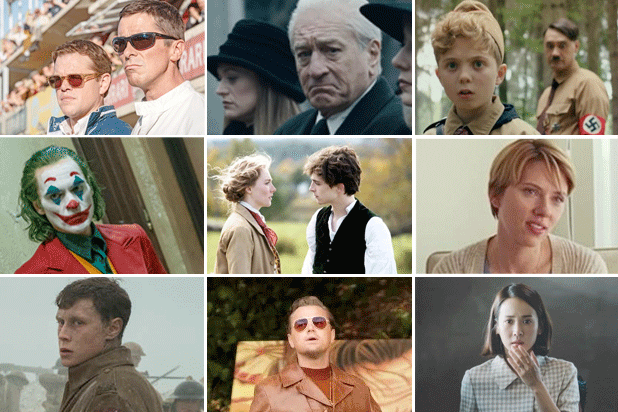
Oscar Sunday 2020

Image result for 2020 best picture oscar nominations
One of my favorite days of the year - Oscar Sunday! This year there are 9 Best Picture nominees. Since I have been blogging way less, I'll summarize my thoughts on each of them below. I also want to say that it is a crime that the Academy has overlooked female filmmakers and people of color. It is truly ridiculous in 2020 to still be focusing so much on stories of white men, told my white men.

1917 When this won the Golden Globe I was pretty surprised, since it hadn't even been released wide yet in America. I was ever-so-slightly against this film, just because I feel over war films in this moment of time. However, I went to see one random Wednesday night and was completely blown away. Some say the "one-shot" is a gimmick that isn't necessary, but I believe it is wholly necessary. I feel and see exactly what the characters see, and I was constantly wondering how they would get out of a scenario (and how the director, Sam Mendes, would get his camera out of it too!).

Ford v. Ferrari This is another one that I wasn't jazzed about seeing, but once it got a Best Pic nom I saw it last week. It is a perfectly find, competent film with performances from the always great and committed Christian Bale and Matt Damon, but it's a movie about two behemoth car corporations having a whose-dick-is-bigger contest while sticking it to the people that actually race and take care of the cars (also, I found the character played by Josh Lucas to be waaaaaay over the top and unbelievable). I have no idea how this film got a Best Pic nomination.

The Irishman Was able to see this in the theater when the Alamo Drafthouse was having a Crime Films of Martin Scorsese  theme in October. I did not care for this film.

Jojo Rabbit I was unsure about seeing this one, but since I'm an Alamo Drafthouse Season Pass holder I figured why not. I'm so glad I did because I loved it! Jojo is a great character to see the world through, and his slow understanding of the world through learning and death is beautiful. Taika Waititi is the real deal.

The Joker The only one I haven't seen, because I have no desire to and a Best Pic nom didn't change that. But I like Joaquin Phoenix generally.

Little Women I adored this film so much that I saw it a second time a few days after my first viewing. I live for the scene of Jo and Laurie's confrontation because it just feels so real. Even with this new and great take on Amy, I still don't buy that Laurie is in love with her and marries her - he just wants to join the March family. Saoirse Ronan is quite possibly my favorite actress (she's been nominated for FOUR Academy Awards and she's only 25!).

Marriage Story A brutal and honest portrayal of divorce and how it causes generally normal, sane, decent people to act like monsters. Great performances all around (I love seeing Adam Driver as Kylo Ren and as divorcing dad Charlie).

Once Upon a Time.....In Hollywood  I'm not a Tarantino fan in general, so I only saw this because it is a Best Pic nominee. I found it to be self-indulgent and weirdly (though not for Tarantino) violent and bloody at the end.

Parasite Lindsay and I saw this when we were in NYC for her birthday in October. I had heard great things about it, but didn't really know what it was about or the plot; I honestly thought it was a horror/psychological scary movie and I asked Lindsay a couple time during the first thirty or so minutes "When does it scary? Is this when it gets scary?" It doesn't every really get scary in the horror sense. It's a brilliant movie and I want it to win all the awards (not just the supremely dumb and anglo-centric-worldview category Best International Feature Film award).

Live Action Shorts All of them told such interesting, unique stories that I'd be happy if any of them won except The Neighbor's Window, which means it will probably win. It's white, affluent people living in Brooklyn learning a pretty easy lesson by watching their neighbors through their window (what kind of people never close a curtain or blind?!).

Animated Shorts Just saw these today! I loved Kitbull, an adorable story about the friendship between a kitten and a pitbull that made me tear up. Also really liked the submission from the Czech Repulic, Dcera (Daughter) for its simple story and amazing camera work with stop motion.

Thoughts on supposed snubs I saw Hustlers and didn't think it was anything special or groundbreaking or revelatory. I was put off by the franticness of Uncut Gems (although read a great piece about how the film is set up as game of basketball and I thought that was really cool). The Farewell was pretty great and was definitely snubbed.

Sunday, January 5, 2020

Star Wars: The Rise of Skywalker

After seeing The Rise of Skywalker just before Christmas, I was positively giddy to see it again in Oslo as my Christmas Day Movie tradition. I enjoyed it more the second time around! The third time I saw it at the Alamo Drafthouse here in Austin, which has fantastic themed pre-show content. Here are my random thoughts on it...

After spending the entire previous movie with our supposed trio apart and in their own story lines, Rise of Skywalker wastes no time bringing the trio together on a mission. I never really bought into them as a group of close friends to begin with, so this start kind of annoyed me. Rey and Finn get close during The Force Awakens, along with Finn and Poe (Finn kind of just clings on to the first people he meets; yes, he is my least favorite character). In The Last Jedi, they aren't together at all. Rey is experiencing A LOT of things, and Finn and Poe are each on their own adventures.

So to have Rise of Skywalker start so deeply in solidifying how close this trio is is a bit weird. But whatever. Their journey to find the Sith Wayfinder is still good. Rey is clearly going through something that neither Finn nor Poe understands; Finn annoyingly thinks he knows her, while Poe wisely knows he doesn't.

For me, the strongest part of the prequel trilogy has been the Rey/Kylo Ren connection and I really enjoyed the outcome of that. Not that Rey is a Palpatine, which is just so ridiculous, but I wonder how else they would have made their connection through the force without making her a Skywalker. Because I enjoy the conclusion, I am willing to forgive Rey being a Palpatine.

Kylo Ren has always been very conflicted, which makes for a good character. He claims to be evil, and he does seem so when he ruthlessly kills his own father. But he also seemed so conflicted. Why he worships Vader is a bit unclear, since he killed the Emperor to save his son before dying. Does Ben/Kylo just conveniently forget this part? Vader/Anakin KILLED the Emperor himself to save his son, so Kylo even listening to the Emperor is strange. Dude needs to learn some family history.

Also, where the eff is Anakin. Surely he could return as a force ghost and give his only grandson some guidance, since this is all his fault basically. My guess is Hayden Christensen declined to be a part of it (I have heard he has become a bit reclusive because the fame from Star Wars was too much....). And also Anakin would likely be force-projected as his older self, right?  Whatever, I think Anakin needed to have a presence.

Rise of Skywalker had just the right amount of world-building, especially with the Kijimi sequence. I love Keri Russell, so that likely played a part in it as well. It built on Poe's background, which I liked. I was excited about Poe as a character, but I felt like he never really developed until now. His humor was finally nailed in this film and I loved the whole bit on Kijimi about "You were a spicerunner? You were a stormtrooper? You were a scavenger? I can do this all day!".

I am very curious as to why Ben disappeared when he died like Obi-Wan and Yoda. What has become of him?! Him and Rey clearly have some unfinished discussions.....

I'm already thinking about when I will see it next!
 

Blog Template by YummyLolly.com